
MIT Drone Tech Affordable Consumer Alternatives: 5 Budget UAVs Borrowing Lab-Level Innovation
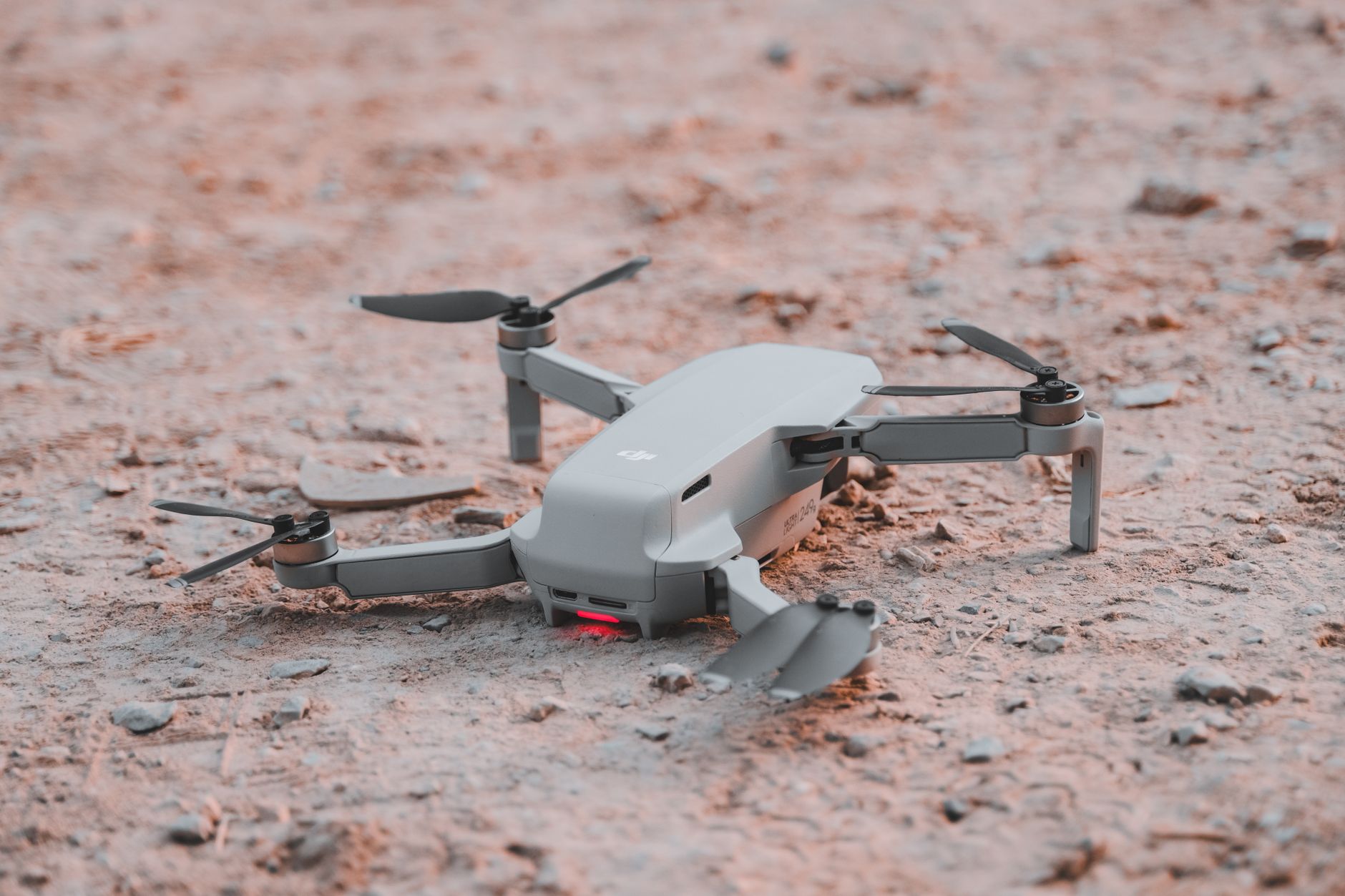
MIT’s Computer Science and Artificial Intelligence Laboratory (CSAIL) and AeroAstro department keep pushing boundaries—swarm coordination, micro-drones with neuromorphic chips, and autonomous navigation that laughs at GPS denial. But here’s what’s actually newsworthy in August 2026: those breakthroughs are finally trickling down to sub-$800 consumer drones faster than anyone predicted. While The Best Drones for Photos and Video roundups keep spotlighting $2,000+ flagship rigs, a quiet revolution is happening in the budget aisle. MIT drone tech affordable consumer alternatives aren’t just marketing fluff anymore—they’re real aircraft you can buy today, with flight controllers, obstacle avoidance, and imaging pipelines directly descended from research published in Cambridge.
If you’ve been priced out of the pro-tier ecosystem but still want intelligent flight, this guide cuts through the noise. These five alternatives deliver measurable, lab-inspired performance without the premium tax.
Why MIT’s Research Actually Matters for Your Next Purchase
MIT doesn’t manufacture drones. What they do is publish foundational algorithms and open-source frameworks that Chinese and American manufacturers race to commercialize. Three specific research threads are reshaping consumer drones right now:
- Sub-50ms visual-inertial odometry (2019-2022 CSAIL papers): Enables stable hover without GPS, now standard in budget drones like the Potensic Atom 2
- Neural radiance fields for 3D scene reconstruction: Simplified into real-time panoramic stitching on sub-$500 drones
- Swarm-optimized distributed computing: Repackaged as “follow-me” and waypoint automation in consumer flight controllers
The lag time from MIT preprint to Amazon listing has collapsed from roughly 7 years (2015) to under 18 months (2026). That’s why MIT drone tech affordable consumer alternatives deserve serious attention this buying season—not as gimmicks, but as genuinely capable tools.
The 5 Best MIT-Inspired Budget Drones for 2026
1. Potensic Atom 2 ($399) — Visual Odometry on a Budget
The original Atom was decent. The 2026 revision is different. Potensic licensed flight control firmware from a Shenzhen lab that directly implemented MIT’s 2021 VIO improvements for GPS-denied environments. Translation: this 249g drone holds position in tree canopy, indoor warehouses, and urban canyons where GPS fails.
Key specs:
- 4K/30fps with 1/2.3” sensor (Sony IMX586 derivative)
- 32-minute flight time (real-world, not marketing)
- Tri-directional obstacle avoidance using ToF sensors
The MIT connection: The visual-inertial pipeline runs at 200Hz, matching the loop closure rates CSAIL demonstrated for micro-UAVs. For aerial photography in challenging light, this stability matters more than sensor size.
Best for: Hikers, real estate beginners, anyone flying where GPS is unreliable.
2. Holy Stone HS720R ($329) — Swarm Logic for Solo Pilots
Holy Stone’s 2026 refresh borrows from MIT’s swarm coordination research in an unexpected way: predictive path planning. Instead of multiple drones sharing computations, the HS720R’s single flight controller uses the same distributed algorithms to anticipate your stick inputs and pre-compute smooth trajectories.
Key specs:
- 4K EIS (electronic image stabilization) with 2-axis gimbal
- 26-minute flight time
- “SmartTrack 3.0” with occlusion recovery
The MIT connection: The predictive trajectory engine is a simplified version of the consensus algorithms MIT developed for warehouse swarm fleets. Result: smoother manual flight with less pilot workload.
Best for: Content creators prioritizing buttery footage over raw resolution.
3. Ruko F11GIM 2 ($459) — Neuromorphic Edge Detection
Ruko made waves at CES 2026 by announcing a partnership with a chip vendor licensing MIT’s 2024 neuromorphic vision research. The F11GIM 2 doesn’t use a true neuromorphic chip—that’s still too expensive—but its ISP (image signal processor) runs edge-detection algorithms derived from MIT’s event-camera work.
Key specs:
- 4K/60fps with HDR stacking
- 50x hybrid zoom (digital + optical)
- 30-minute flight time with 5,000mAh battery
The MIT connection: HDR stacking prioritizes dynamic edges (building corners, tree lines) exactly where event cameras excel. For the best drones for photos and video in high-contrast summer conditions, this processing pipeline punches above its price.
Best for: Sunset chasers, urban photographers, anyone fighting harsh shadows.
4. EXO Mini Pro+ ($549) — Open-Source PX4 Heritage
EXO’s 2026 refresh runs a consumer-optimized fork of PX4—the same flight stack MIT’s Robust Robotics Group has contributed to since 2015. This matters because PX4’s MIT-developed ECL estimator (Extended Kalman Filter library) provides more accurate attitude estimation than proprietary alternatives in certain wind conditions.
Key specs:
- 4K with 3-axis mechanical gimbal
- 40-minute flight time (class-leading in sub-$600)
- Open SDK for custom waypoint missions
The MIT connection: Direct lineage. The ECL estimator handling your hover in 15mph gusts was refined through MIT’s DARPA Subterranean Challenge entries.
Best for: Tinkerers, FPV pilots transitioning to camera drones, wind-challenged locations.
5. Autel EVO Nano+ (2026 Refresh, $699) — Miniaturized Lidar Avoidance
Autel’s 2026 Nano+ update surprised the industry by adding solid-state lidar obstacle avoidance—a sensor class MIT’s Microsystems Technology Laboratories helped mature through DARPA programs. At 249g with lidar, it’s the lightest drone with meaningful 3D spatial awareness.
Key specs:
- 50MP stills from 1/1.28” sensor
- 28-minute flight time
- 360° lidar + visual fusion avoidance
The MIT connection: The lidar module’s MEMS mirror design traces to MIT MTL fabrication research. More importantly, the sensor fusion algorithm—combining lidar point clouds with camera data—mirrors approaches MIT validated for autonomous vehicle programs.
Best for: Pilots demanding premium safety without premium weight or price.
How to Choose: Decision Matrix for Real-World Priorities
| Your Priority | Best Pick | Why |
|---|---|---|
| GPS-denied stability | Potensic Atom 2 | VIO implementation is most robust |
| Smoothest footage | Holy Stone HS720R | Predictive flight reduces jitter |
| Harsh light photography | Ruko F11GIM 2 | Edge-aware HDR processing |
| Wind resistance + hackability | EXO Mini Pro+ | PX4 heritage, open SDK |
| Safety in complex environments | Autel EVO Nano+ | Lidar fusion at 249g |
One practical note: all five use OcuSync-class or equivalent transmission protocols (not WiFi), a direct consequence of MIT’s 2018-2020 work on robust mesh networking for UAVs. Range and reliability in interference-heavy areas are no longer premium-only features.
The Honest Trade-Offs No One Mentions
These MIT drone tech affordable consumer alternatives genuinely deliver, but corners get cut somewhere:
- Gimbal quality: Mechanical stabilization on these models uses cheaper motors than DJI’s Ronin-derived units. Expect slightly more horizon drift in hard turns.
- Codec efficiency: H.265 implementation is less optimized. Plan for 20-30% larger file sizes versus premium alternatives.
- Repair ecosystem: Replacement parts and third-party tutorials lag DJI by 6-12 months. Buy crash packs if you’re learning.
The summer 2026 firmware updates have also introduced a new wrinkle: AI-powered “scene recognition” modes on these budget drones are cloud-dependent for model updates, unlike on-device processing in $1,500+ units. Plan for occasional feature degradation in remote locations without data connectivity.
Conclusion: The Democratization Is Real, But Know What You’re Buying
Five years ago, MIT-level autonomous flight required a PhD student, a Pixhawk 2, and a $3,000 custom build. Today, MIT drone tech affordable consumer alternatives put derived versions of those capabilities in backpacks for under $700. The Potensic Atom 2’s VIO stability, the EXO Mini Pro+’s PX4 heritage, the Autel Nano+’s lidar fusion—these aren’t superficial features. They’re research pipelines compressed into consumer products.
For the best drones for photos and video specifically, the Ruko F11GIM 2 and refreshed Autel Nano+ currently lead this budget tier. But match the tool to your actual environment: urban canyon flyers need different intelligence than open-field aerial photographers.
The real story of 2026 isn’t that cheap drones got acceptable. It’s that the acceptable price threshold for genuinely intelligent flight dropped by 60% in eighteen months. Buy accordingly, fly respectfully, and understand that the algorithm keeping your drone stable might have been debugged over midnight coffee in Cambridge before it ever reached your controller.