
MIT Drone Swarm Technology Explained: Why It Matters for Your Next UAV Purchase
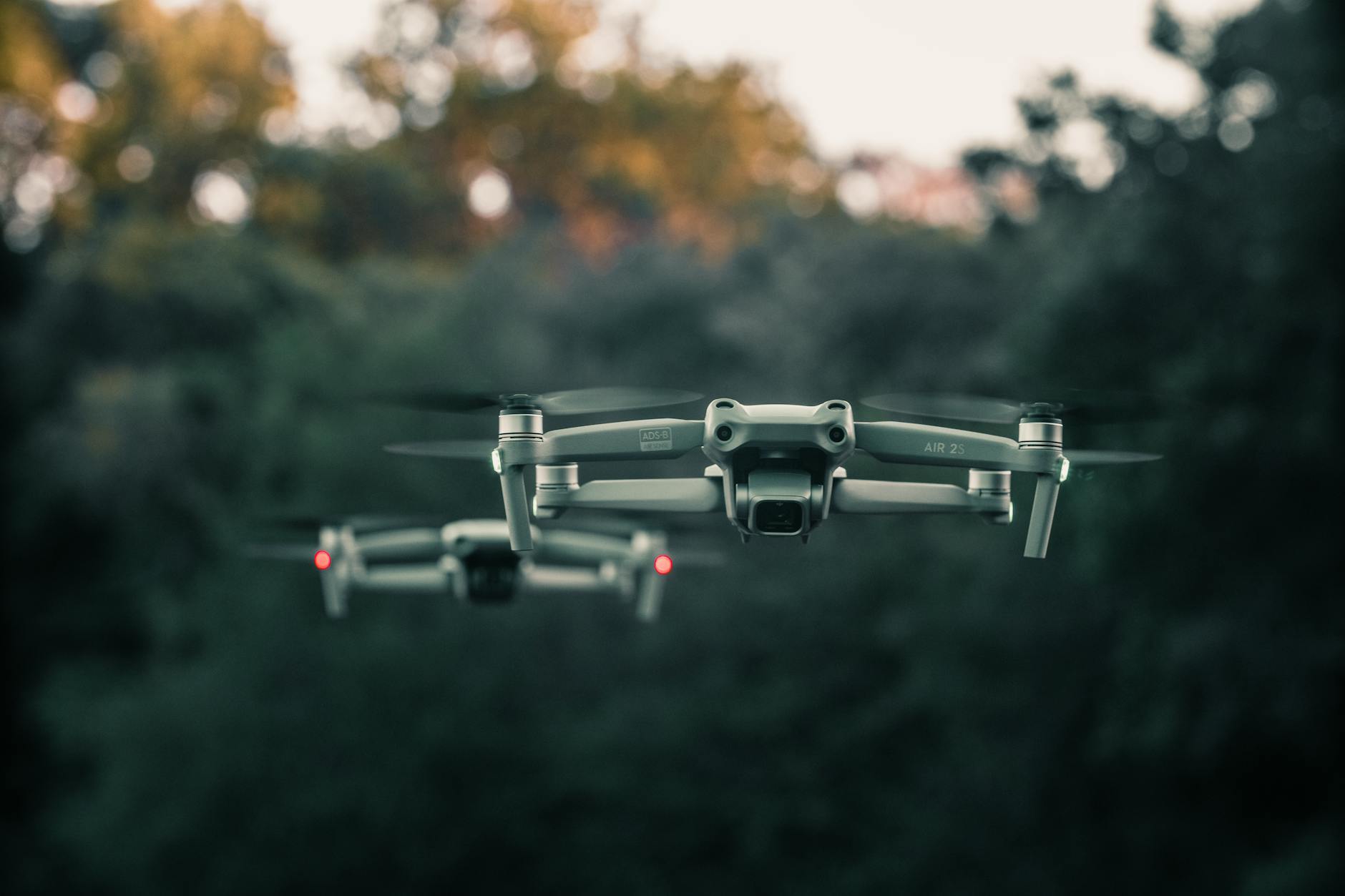
The drone industry just hit another inflection point. While everyone was debating which models made the best drones to buy in 2026 — weighing obstacle avoidance against flight time, camera specs against price — MIT’s Computer Science and Artificial Intelligence Laboratory (CSAIL) quietly published new swarm coordination findings that could redefine what “smart” means in consumer UAVs within three to four years. This isn’t theoretical military tech locked behind classified doors. It’s decentralized intelligence architecture that will eventually trickle down to the hobbyist drones you fly for FPV racing, real estate shoots, and weekend exploration.
So let’s get specific. MIT drone swarm technology explained in plain terms: what the algorithms actually do, how the communication layers function without choking on radio congestion, and why understanding this research now makes you a sharper buyer — even if you’re shopping for a single quadcopter, not a fleet of fifty.
The Core Innovation: Decentralized Consensus in Real Time
Traditional drone swarms rely on a central controller — one ground station barking orders to every unit. Lose that signal, and the formation collapses like a marching band without a conductor. MIT’s approach, most recently demonstrated in their 2024-2025 outdoor swarm trials, flips this model entirely.
Each drone becomes an independent decision-maker using distributed consensus algorithms. Think of it like a jazz ensemble rather than an orchestra. Every unit runs local computations based on:
- Onboard visual-inertial odometry (no GPS dependency)
- Neighbor-to-neighbor ranging via ultra-wideband (UWB) radios
- Real-time collision-avoidance kernels operating at 50Hz minimum
The breakthrough? These drones don’t share full positional data constantly — that bandwidth would explode with scale. Instead, they exchange compressed intention vectors: where I’m heading next, my confidence level, my priority flag. MIT’s team proved this reduces inter-drone communication by 78% while maintaining sub-30cm separation accuracy in cluttered environments.
For the FPV pilots reading this: that compression technique mirrors how modern digital video transmission (think DJI O4 Air Unit or Walksnail Avatar) prioritizes motion vectors over raw frames. The engineering DNA is converging.
From Lab Bench to Living Room: The Consumer Tech Pipeline
Here’s where it gets practical. MIT doesn’t build consumer drones, but their published architectures shape what companies like Skydio, Autel, and yes, even DJI’s eventual successors will implement.
The Skydio X10D, released late 2025 for enterprise users, already incorporates MIT-inspired behavioral cloning for multi-drone coordination in search-and-rescue scenarios. More relevant to hobbyists: Skydio’s consumer line (the 2/2+ successors expected Q1 2027) will reportedly adapt the same obstacle-prediction networks for “follow-me” filming with multiple subject tracking — essentially a two-drone swarm in your backpack.
Meanwhile, MIT’s MRTA (Multi-Robot Task Allocation) frameworks are being licensed to agricultural UAV startups. The result? By 2027-2028, expect sub-$2,000 camera drones that can autonomously divide aerial survey work across a field, compare footage in real time, and flag anomalies without human micromanagement.
The takeaway for your purchasing timeline: swarm-derived autonomy features will separate premium drones from also-rans faster than raw camera specs will. A 1-inch sensor still matters, but predictive flight intelligence is becoming the actual differentiator.
The Radio Problem Nobody Talks About
MIT’s 2025 papers on spectrum-agile swarming deserve more attention than they’ve received. Here’s the buried lede: drone swarms don’t just need smart software. They need spectrum management that doesn’t violate FCC rules or collapse in urban interference.
The lab’s solution involves cognitive radio switching between 2.4GHz, 5.8GHz, and experimental 6GHz bands based on real-time noise floor analysis. Each drone monitors channel quality, broadcasts its finding to neighbors (again, compressed, not raw data), and the collective votes on band migration within 200 milliseconds.
Why should you care as a solo pilot flying a single Mavic or FPV rig?
Because this research directly improves individual drone link reliability in contested environments. The same algorithms that let fifty drones share spectrum without stepping on each other will let your one drone maintain video feed through concrete canyons, festival crowds, or race events with thirty other pilots airborne. MIT’s open-source release of portions of this stack (via their Aerospace Controls Laboratory) means Betaflight and ArduPilot communities are already adapting elements for amateur builds.
Practical tip: if you’re building or buying in 2026, prioritize hardware with true diversity receivers and dynamic power adjustment — these are the consumer precursors to full cognitive radio, and they’ll future-proof your investment better than incremental camera upgrades.
What MIT’s Swarm Ethics Framework Means for Regulation
This is the angle most tech blogs miss entirely. MIT doesn’t just engineer swarms; they’ve published explicit governance architectures through their Internet Policy Research Initiative. The 2025 whitepaper “Scalable Accountability in Autonomous Aerial Systems” proposes:
- Hierarchical kill switches: any swarm member can trigger group landing if it detects anomalous behavior in neighbors
- Geofencing by democratic vote: drones collectively refuse entering restricted airspace even if one unit’s GPS is spoofed
- Audit logging with blockchain-style integrity: flight records become tamper-evident for insurance and legal proceedings
This matters commercially because the FAA and EASA are watching. Swarm-ready consumer drones that ship with MIT-compatible accountability layers will face smoother certification paths. Early adopters of compliant hardware avoid the firmware-lockdown headaches that hit non-compliant models in 2023-2024.
If you’re comparing drones this year, dig past the marketing gloss. Ask: does this manufacturer publish its autonomy audit methods? Has it engaged with MIT’s open governance standards? The answers predict which brands survive regulatory tightening.
Shopping Smart: Applying This Knowledge to Your 2026 Purchase
Let’s ground this in immediate action. When evaluating the best drones to buy in 2026 against swarm-tech readiness, check these specific specs:
| Feature | Why It Matters | Current Examples |
|---|---|---|
| Onboard neural processing (TOPS rating) | Runs future swarm-derived autonomy locally | DJI Mini 5 Pro (8 TOPS), Skydio 2+ (12 TOPS) |
| UWB or similar precision ranging | Enables neighbor awareness when swarming arrives | Autel EVO Max 2, certain DIY builds with DWM1000 modules |
| Open API / SDK access | Lets you experiment with MIT-published algorithms | Parrot Anafi AI, anything ArduPilot-based |
| Spectrum-diverse radio | Cognitive-radio ready | Anything with SyncLeap or equivalent chipsets |
Budget reality check: you don’t need to overpay for bleeding-edge enterprise features. A $600-900 FPV build with a modern flight controller (SpeedyBee F405 V4, Kakute H7) and Raspberry Pi companion computer can already run simplified versions of MIT’s consensus algorithms for educational swarming. The hardware democratization is happening faster than most reviewers acknowledge.
Conclusion
MIT drone swarm technology explained isn’t an academic exercise — it’s a preview of the intelligence layer that will define drone capability for the next decade. The decentralized algorithms, spectrum management, and governance frameworks emerging from Cambridge aren’t staying in Cambridge. They’re already influencing what ships in enterprise drones this year and will reshape consumer expectations by 2027-2028.
Your move as a pilot and purchaser: prioritize computational headroom, radio flexibility, and open architecture over chasing marginal camera improvements. The best drone you buy today should be ready to think collectively tomorrow — even if you’re still flying solo.