
Long Range FPV Drone Antenna Setup: The 2026 Field Guide to Breaking 10km Legally
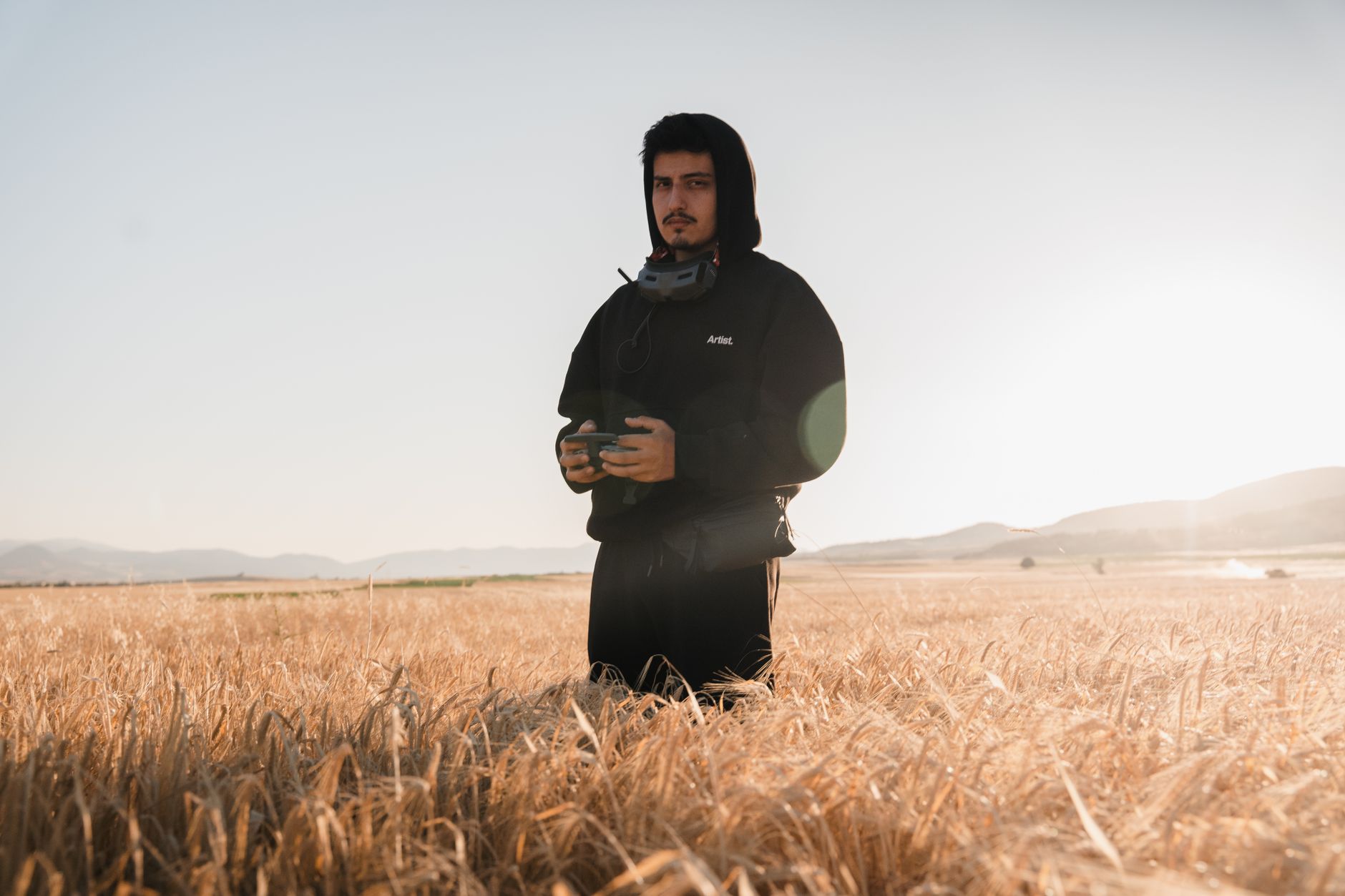
With the FAA’s Remote ID compliance deadline fully in effect and 1.3GHz video gear making a quiet comeback among Part 107 waiver holders, long range FPV is having its most technical renaissance since 2019. Pilots aren’t just flying farther—they’re engineering their radio links with the same precision once reserved for commercial UAV platforms. Whether you’re chasing mountain ridgelines or mapping remote infrastructure, your long range FPV drone antenna setup is the single variable that determines whether you return with footage or spend your evening hiking for a downed quad.
This isn’t about slapping the biggest antenna on your goggles and hoping. It’s about understanding propagation, matching polarization, and building redundancy into every link in your chain. Here’s how to do it properly in 2026’s regulatory and hardware landscape.
Why Antenna Choice Matters More Than Power
Here’s the counterintuitive truth that saves most pilots hundreds of dollars: a 25mW transmitter with optimized antennas will outperform a 1W brute-force setup with mismatched or poorly positioned antennas. RF power follows the inverse-square law, but antenna gain and polarization efficiency multiply your effective radiated power without touching your battery or breaking FCC limits.
For your long range FPV drone antenna setup, you need to think in three dimensions—literally. Your video link, control link, and GPS/telemetry each demand different antenna characteristics. Most range failures in 2026 aren’t hardware failures; they’re configuration failures where a pilot runs identical antennas on overlapping frequencies without considering radiation patterns.
The 2026 antenna hierarchy for serious long range work:
- Video: 1.3GHz/900MHz for >5km, 5.8GHz for <3km with directional ground stations
- Control: 900MHz Crossfire or 868MHz ELRS with TBS or Namimno hardware
- Telemetry: Separate 433MHz link or LoRA bridge for failsafe recovery
Running 5.8GHz video beyond 3km in 2026 is technically possible but practically masochistic. The atmospheric attenuation at 5.8GHz is roughly 4x worse than 1.3GHz, and foliage penetration drops to nearly zero. If you’re serious about range, you need to get comfortable with lower frequencies and the larger antennas they require.
Matching Polarization: The 3dB Rule That Destroys Ranges
Circular polarization (CP) dominates FPV for good reason—it rejects multipath interference and maintains link quality through banking maneuvers. But here’s what most guides gloss over: mixing RHCP and LHCP on your transmitter and receiver creates an instant 20-30dB penalty. That’s not a minor efficiency loss; that’s your signal dropping below your receiver’s sensitivity floor at half your intended range.
For any long range FPV drone antenna setup, polarization discipline is non-negotiable:
- Match CP direction exactly—RHCP to RHCP, LHCP to LHCP
- Never mix linear and circular without expecting 3dB minimum loss
- Diversity receivers need identical polarization on both antennas for coherent combining
The 2026 market has simplified this somewhat. TrueRC and IBCrazy now color-code their CP antennas by direction, and most ELRS receivers ship with clearly marked LHCP options. But cross-polarization mistakes remain the #1 cause of “unexplained” range drops in Facebook pilot groups.
For ground stations, consider dual-polarization diversity—one RHCP and one LHCP on separate receiver modules, not combined. This captures reflected signals that have flipped polarization off terrain, effectively doubling your multipath resilience in mountainous or urban terrain.
Ground Station Architecture: Directional vs. Omnidirectional Strategy
Your airborne antenna is only half the equation. In 2026, the serious long range community has largely abandoned omni-only ground stations for anything beyond casual 2-3km flying. The math is brutal: a 14dBi patch panel or helical antenna transforms your received signal by a factor of 25x compared to a standard Cloverleaf.
The hybrid ground station setup that works:
- Primary: Directional tracking antenna (helical for 1.3GHz, patch array for 5.8GHz)
- Secondary: Wide-beam omni (Cloverleaf or Vivaldi) for launch/landing and close-range safety
- Tertiary: Rapid-scan diversity module for instantaneous signal switching
Manual tracking with a directional antenna is a skill that takes practice. Most pilots in 2026 use either antenna trackers driven by telemetry GPS data, or fixed-position multi-patch arrays with 120° overlapping coverage. The new ImmersionRC SpiroNET 2026 helical series includes integrated RSSI feedback that helps you learn pointing accuracy without losing your quad.
For 1.3GHz specifically, the IBCrazy 5-turn helical remains the efficiency king, but at 340mm long it’s unwieldy. The compromise solution gaining traction is a 2-turn helical (shorter, wider beam) paired with a 120° patch on a diversity controller. You sacrifice 4dB gain for dramatically easier tracking.
Airframe Integration: Placement and Vibration Isolation
Your long range FPV drone antenna setup lives or dies by mechanical implementation. The cleanest RF design fails if your antenna whips in prop wash or grounds through a carbon fiber frame.
Hard-earned 2026 placement rules:
- Video antennas: 90° to control antennas minimum—cross-polarization isolation prevents receiver desensitization
- Keep all antennas 50mm+ from carbon fiber—CF is conductive and creates shadow zones
- Vibration isolate with soft-mount grommets—microphonic noise in 1.3GHz amplifiers is real and ugly
- GPS antenna: top-center, unobstructed 360°—the one antenna that genuinely needs perfect sky view
The “TBS immortal T” and similar IPEX-connected antennas have largely replaced direct-solder pigtails for video, but the connector itself becomes a failure point. Hot glue strain relief at the connector body, never the wire. For 900MHz control links, the full-size TBS Crossfire antenna still outperforms the micro versions for range—accept the mounting penalty.
One under-discussed 2026 development: active antenna systems with integrated LNAs (Low Noise Amplifiers) are now reliable enough for field use. The TrueRC X-AIR 5.8 with integrated LNA adds 12dB system gain before your receiver, but requires clean 5V power and adds 340mW draw. Worth it for marginal 5.8GHz range extension, but irrelevant if you’ve already moved to 1.3GHz.
Legal Power Limits and the Waiver Path for 2026
No discussion of long range FPV drone antenna setup is complete without acknowledging the regulatory ceiling. In the US, FCC Part 15 limits 5.8GHz video to 25mW EIRP and 1.3GHz to 1W (with specific antenna constraints). 900MHz control links under Part 15.249 allow 1W with limitations, but most pilots operate under amateur radio provisions with appropriate licenses.
The 2026 reality:
- Part 107 commercial pilots can apply for frequency waivers for 1.3GHz video with demonstrated RF engineering competence
- Amateur radio licensees (Technician or higher) have broader 1.3GHz privileges but cannot use them for commercial work
- ELRS 868/915MHz control remains the most waiver-friendly path for most pilots
The antenna optimization in this guide assumes you’re operating within these frameworks. Adding amplifiers to overcome poor antenna design is both illegal and ineffective—antenna gain is free, linear, and unrestricted. Amplifier gain is regulated, expensive, and introduces noise.
Conclusion: Build Your Long Range FPV Drone Antenna Setup for the Edge Case
Range optimization isn’t about your best-case scenario. It’s about maintaining control and video when everything goes wrong—when you’re behind terrain, when your battery sags, when interference spikes. Your long range FPV drone antenna setup should be engineered for the edge case, then flown with margins.
Start with matched, high-quality antennas at every position. Move to lower frequencies as your range ambitions grow. Build directional capability into your ground station before you add amplifiers. And test your complete link budget with RF Line-of-Sight calculators that account for Fresnel zone clearance, not just straight-line distance.
The pilots pushing 15-20km in 2026 aren’t using magic hardware. They’re using disciplined antenna engineering, clean installation, and frequencies appropriate for their mission. The equipment is available to anyone. The difference is in the setup.