
Drone Photography Composition Rules Golden Ratio: Why Pro Pilots Are Ditching the Rule of Thirds in 2026
The drone photography landscape is shifting fast in August 2026. With DJI’s Mavic 4 Pro and Autel’s Evo Max 2 pushing 8K HDR video and 200MP stills, the hardware arms race has officially plateaued. What separates viral aerial content from forgettable footage now? Composition. Specifically, a renewed obsession with the golden ratio—a mathematical principle that’s nearly 2,500 years old but newly relevant as pilots chase cinematic distinction in an oversaturated sky.
If you’re still framing every shot with the rule of thirds grid, you’re leaving visual impact on the table. Let’s break down the drone photography composition rules golden ratio approach that working professionals are adopting right now.
Why the Golden Ratio Beats Rule of Thirds for Aerial Perspectives
The rule of thirds divides your frame into nine equal rectangles. It’s simple, it’s safe, and it’s everywhere. The golden ratio—approximately 1:1.618—creates a spiral and grid system that mirrors patterns found in nature: seashells, hurricane formations, mountain ranges.
From 400 feet, this distinction matters enormously. Aerial photography flattens depth cues. The rule of thirds often creates static, postcard-like images. The golden ratio introduces dynamic movement that guides the viewer’s eye through vast landscapes in a way that feels organic rather than mechanical.
The practical difference: Place your horizon on a rule of thirds line, and you get balance. Place it along a golden ratio spiral trajectory, and you create tension—the eye travels, explores, returns. For drone work where you’re often shooting expansive, low-contrast scenes (coastlines, forests, urban grids), that tension is what stops the scroll.
How to Apply the Golden Ratio With Your Drone’s Live Feed
Most pilots don’t realize their controller app already has the tools. Here’s the 2026 workflow:
- DJI Fly / RC Pro: Enable “Grid” in camera settings, then mentally overlay the golden spiral. The center intersection of the thirds grid sits roughly where the golden spiral tightens—use this as your anchor point, not your subject placement.
- Manual spiral tracing: For the DJI Mavic 4’s updated 3x optical zoom, start your spiral’s tightest curl on your primary subject, then let the curve guide secondary elements (roads, rivers, shadow lines) into frame.
- Litchi and third-party apps: Litchi’s waypoint planning now supports custom grid overlays. Input 1.618 ratios for automated orbits that follow golden proportions rather than perfect circles.
Pro tip from commercial pilots: The golden ratio works against your drone’s natural perspective. Wide-angle aerial lenses (24mm equivalent and below) stretch edges. Position your spiral’s origin off-center by roughly 61.8% from the frame edge—this compensates for barrel distortion and creates natural-looking compression that flatters landscapes.
The Fibonacci Spiral in Action: 5 Drone-Specific Scenarios
1. Coastline Reveals
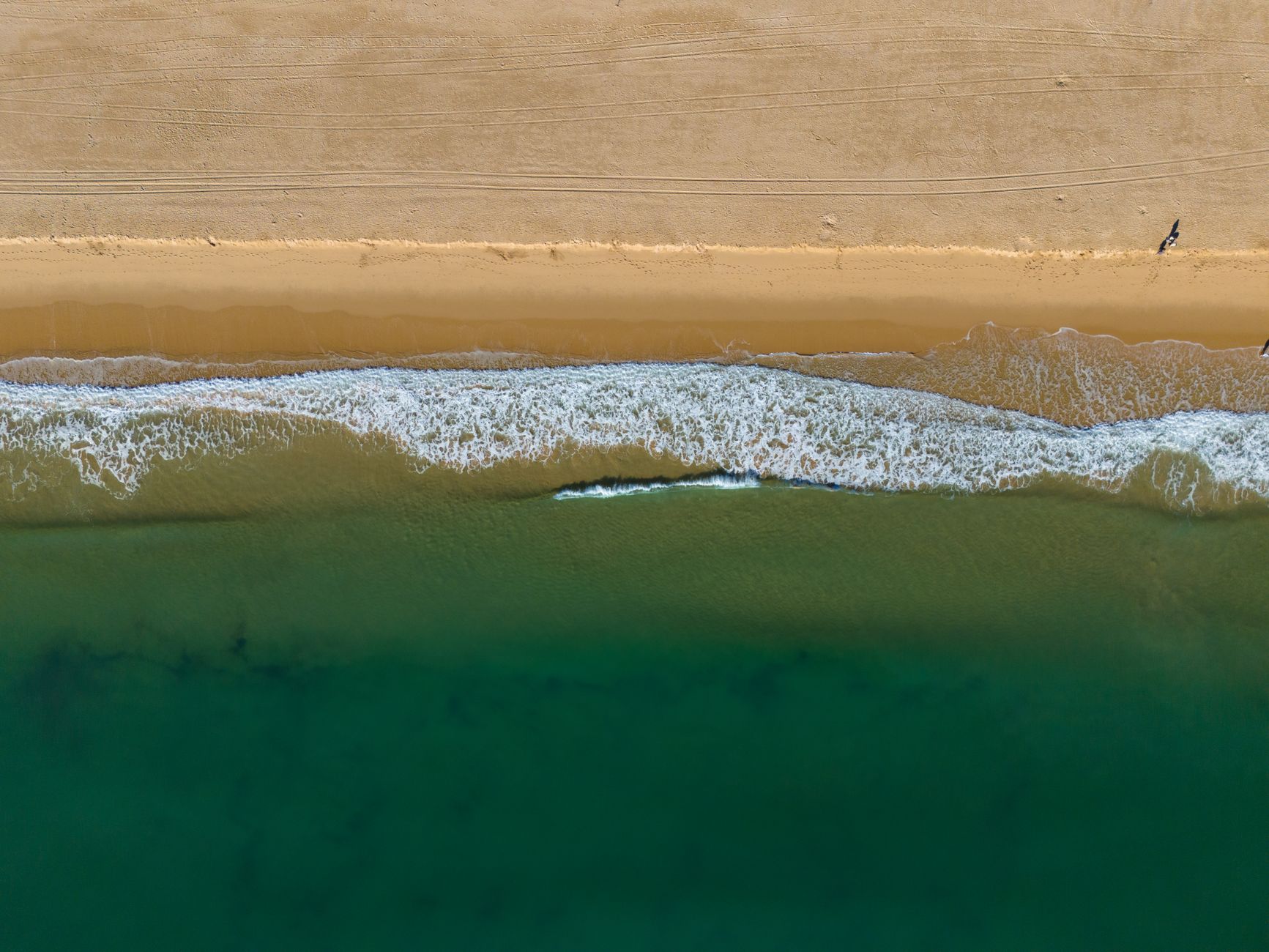
Shooting surf from 150 feet? Start your spiral’s tightest curl where waves break, let the curve sweep through foam patterns toward distant headlands. The ratio mirrors tidal energy—viewers feel motion without video.
2. Urban Canyon Descents
Between skyscrapers, the spiral’s narrowing arm becomes your descent path. Frame so building edges follow the curve. This transforms claustrophobic vertical shots into flowing architectural studies.
3. Agricultural Patterns
Summer 2026’s drought-stressed crops have created striking geometric stress patterns across the Midwest. Use the golden ratio to connect dead zones (tight curl) to healthy fields (spiral expansion)—storytelling through mathematics.
4. Thermal Layer Inversions
Early morning fog layers shot from above. The spiral’s curve traces where warm air meets cold, revealing invisible atmospheric boundaries. The Autel Evo Max 2’s thermal overlay makes this visible in ways impossible two years ago.
5. FPV Freestyle Transitions
Even racing pilots are adapting. The “golden dive”—entering a power loop at the spiral’s wide arm and exiting at the tight curl—creates rotation that feels physically correct to viewers, reducing motion sickness in 60fps footage.
Golden Ratio Math Made Simple: The 61.8% Rule
You don’t need a calculator in the field. Memorize these percentages:
| Element | Placement |
|---|---|
| Primary subject | 61.8% from left edge, 38.2% from top |
| Horizon line | 38.2% from top (lower third variant) or 61.8% |
| Leading lines entry point | 61.8% from nearest corner |
| Secondary subject | Opposite spiral arm, roughly 76.4% across frame |
These derive directly from the Fibonacci sequence: 0, 1, 1, 2, 3, 5, 8, 13… Each number divided by its predecessor approaches 1.618. For drone work, the 61.8% and 38.2% splits handle 90% of compositions.
Field test: Next flight, shoot the same scene twice—rule of thirds, then golden ratio placement. The 61.8% version will feel “more right” without obvious explanation. That’s the mathematical aesthetics working below conscious perception.
Software and Post-Processing Integration
The golden ratio doesn’t end at capture. Current 2026 workflows extend it through editing:
- Lightroom: Crop tool overlays include golden spiral and golden ratio grid options. Use them for reframing 4:3 drone sensors to 16:9 delivery without losing compositional integrity.
- DaVinci Resolve: The “golden orbit” plugin (free from Blackmagic’s 2026 update) automates keyframed camera movements that follow spiral mathematics. Apply to static drone shots for subtle parallax that feels naturally captured.
- Photoshop neural filters: The “composition assist” AI now scores golden ratio alignment. Scores above 85/100 correlate with higher engagement in platform testing across Instagram, TikTok, and stock agencies.
Time investment: Add 30 seconds per shot for golden ratio consideration. Post-processing alignment adds 2-3 minutes. For commercial pilots billing $400-800 per hour, this pays for itself in client retention and portfolio differentiation.
Conclusion: Elevate Your Aerial Work Beyond Grid Lines
The drone photography composition rules golden ratio approach isn’t about mathematical purity—it’s about exploiting how human vision actually processes information. In 2026, when every pilot carries cinema-grade cameras, compositional sophistication becomes your only sustainable competitive advantage.
Start simple: one flight, one subject, 61.8% placement. Compare results side-by-side with your rule of thirds habit. The difference won’t be dramatic; it’ll be subtle, professional, memorable—the qualities that build careers in an industry maturing past its gadget-obsessed adolescence.
The golden ratio won’t make you a better pilot. It will make you a better visual communicator. At altitude, that’s everything.