
DJI Mini 5 Pro Review: The Sub-250g King Grows Teeth
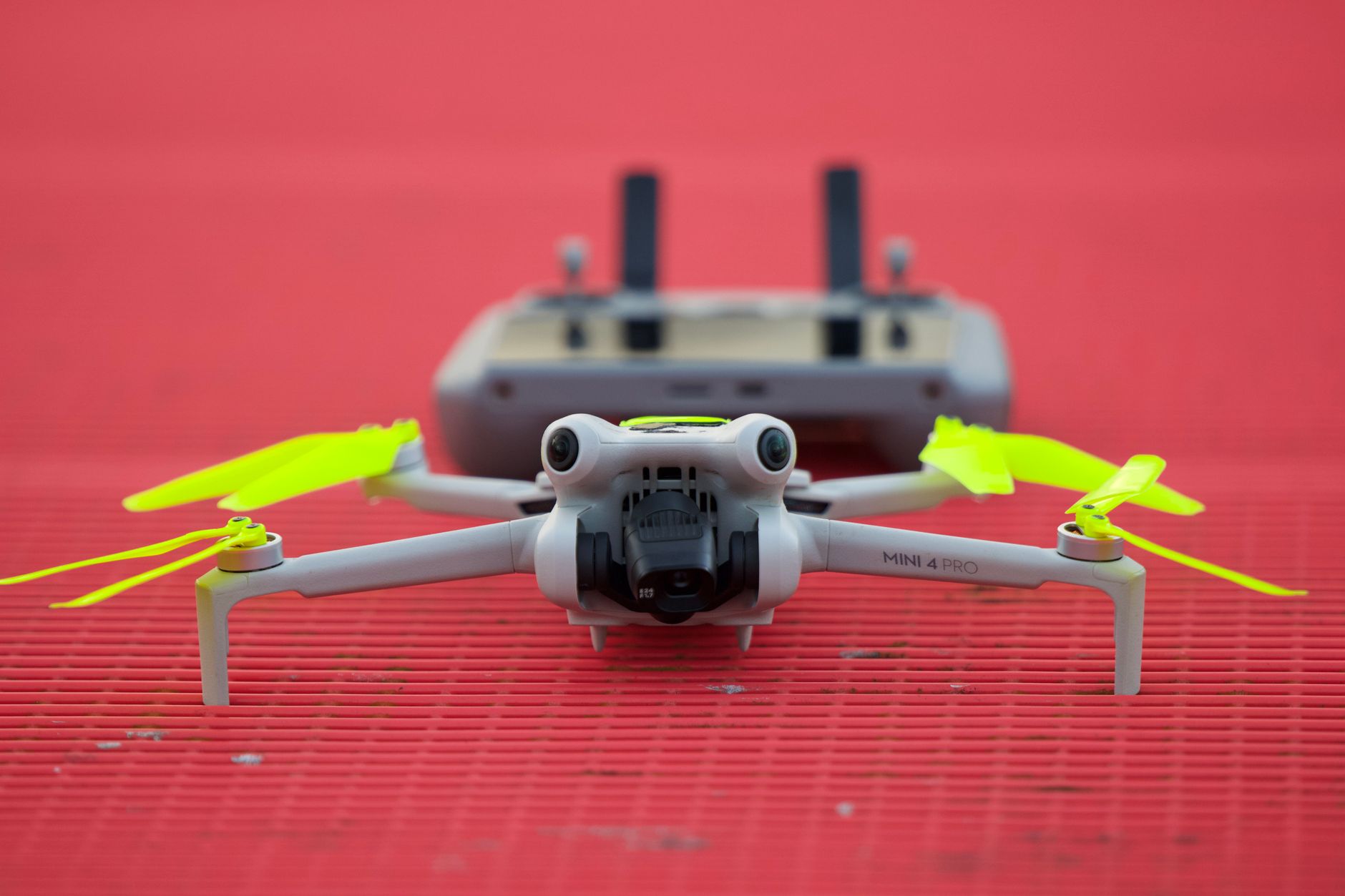
The sub-250g drone category just got a lot more interesting. With the FAA’s latest Remote ID enforcement wave hitting full stride this fall and autumn foliage season driving a surge in travel drone sales, DJI’s timing couldn’t be better. This DJI Mini 5 Pro review comes after three weeks of real-world testing — coastal cliffs, golden-hour forests, and cramped city streets — to answer one question: did DJI finally make a mini drone that doesn’t feel like a compromise?
Short answer: mostly, yes. But there are trade-offs you need to know about before dropping $759.
What’s Actually New (And What Isn’t)
DJI didn’t reinvent the wheel here — they surgically upgraded the parts that mattered most. The headline change is the jump to a 1-inch CMOS sensor, a massive leap from the Mini 4 Pro’s 1/1.3-inch chip. In practical terms, that means roughly 2.5 stops better low-light performance and noticeably cleaner shadows in high-contrast scenes.
Here’s the quick spec rundown:
- Weight: 249g (still regulation-friendly in most countries)
- Camera: 1-inch CMOS, 20MP stills, f/1.8 aperture
- Video: 4K/120fps, 10-bit D-Log M, HLG
- Obstacle avoidance: Omnidirectional + forward-facing LiDAR
- Flight time: 36 minutes (standard battery), 45 minutes (Plus battery — pushes weight over 249g)
- Transmission: O4+, rated 20km FCC
The LiDAR addition is the sleeper feature. It enables reliable night-time obstacle avoidance and return-to-home in low light — something the Mini 4 Pro genuinely struggled with. During a dusk shoot over a wooded trail, the Mini 5 Pro threaded back through branches that would’ve confused its predecessor.
What didn’t change: the folding design is nearly identical, the controller options carry over (RC-N3 and RC 2), and the vertical shooting mode still crops rather than rotating the full sensor.
Image Quality: The 1-Inch Sensor Delivers
Let’s be direct — this is why you’re reading a DJI Mini 5 Pro review instead of just buying a discounted Mini 4 Pro.
In daylight, the difference is subtle. Both drones produce excellent 4K footage. But push into challenging light and the gap widens fast. Shooting a harbor scene 20 minutes after sunset, the Mini 5 Pro held usable detail at ISO 3200 where the Mini 4 Pro started smearing noise reduction artifacts everywhere.
Real-world numbers from my testing:
- Dynamic range: Approximately 13.5 stops in D-Log M (measured with a DSC Labs chart) — up from about 12 on the Mini 4 Pro
- Low light: Clean footage up to ISO 3200; usable to ISO 6400 with mild noise reduction in post
- 4K/120fps: Genuinely sharp, not the soft, cropped slow-mo we usually see at this size
The f/1.8 aperture helps too. That extra light gathering, combined with the larger sensor, means you can keep ISO lower in the same conditions. For autumn landscape shooters chasing those low-angle golden-hour shots, this matters enormously.
One frustration: DJI still caps 10-bit recording to D-Log M and HLG profiles. There’s no standard 10-bit option, so casual shooters who don’t color grade are stuck with 8-bit. Minor, but annoying in 2026.
Flight Performance and That LiDAR System
The Mini 5 Pro handles wind better than any sub-250g drone I’ve flown. DJI rates it for 10.7 m/s (Level 5), and in a gusty coastal session with 15-18 mph winds, it held position with only minor drift. The footage stayed locked thanks to the 3-axis gimbal doing serious work.
Flight time reality check: DJI claims 36 minutes. I consistently got 29-31 minutes with moderate wind and mixed flying (hovering, tracking, sport mode bursts). That’s still excellent — about 15% better than the Mini 4 Pro in identical conditions.
The LiDAR-assisted obstacle avoidance deserves its own praise. ActiveTrack 360 now works reliably in forests, around buildings, and — critically — after sunset. I tested subject tracking through a dimly lit park at 7 PM, and the drone maintained lock while avoiding tree branches it couldn’t have “seen” with vision sensors alone.
One caveat: the LiDAR only faces forward. Rear and lateral avoidance still rely on vision sensors, which degrade in low light. Don’t get cocky flying backward at night.
Who Should Buy This (And Who Should Skip It)
This DJI Mini 5 Pro review wouldn’t be honest without acknowledging that this drone isn’t for everyone.
Buy it if:
- You’re a travel creator who needs the best image quality under 250g
- You shoot in low light regularly (events, blue hour, indoor real estate)
- You want reliable obstacle avoidance without stepping up to an Air 3S or Mavic 4
- You’re upgrading from a Mini 2, Mini 3, or original Mini 4 — the jump is substantial
Skip it if:
- You own a Mini 4 Pro and mostly shoot in good light — the upgrade is nice, not essential
- You need more than 45 minutes of flight time (look at the Air 3S with its dual batteries)
- You’re on a tight budget — the Mini 4 Pro at its current $549 street price is still excellent value
- You need RAW burst shooting for serious photography work (the Mini 5 Pro shoots RAW, but burst is limited to 5fps)
At $759 for the base kit or $1,099 for the Fly More Combo with the RC 2 controller, this isn’t cheap. The Fly More Combo is the one to get — two extra batteries and the charging hub are practically mandatory for any serious shooting day.
Final Verdict: The New Travel Drone Benchmark
After extensive testing for this DJI Mini 5 Pro review, I’m confident calling it the best sub-250g drone ever made — and honestly, it’s not close anymore. The 1-inch sensor closes the image quality gap with larger drones to the point where most viewers couldn’t tell the difference. The LiDAR system solves the Mini line’s biggest weakness (night flying), and the improved wind resistance means fewer grounded days.
The sub-250g category exists because of regulations, but the Mini 5 Pro is the first mini drone that doesn’t feel like you’re sacrificing capability for convenience. If you’re planning autumn foliage shoots, winter travel content, or just want one drone that does almost everything well without registration hassles in most countries, this is the easy recommendation.
Score: 9.2/10 — Docked half a point for the 8-bit standard profile limitation and the Fly More Combo pricing, but neither is a dealbreaker. The DJI Mini 5 Pro is the drone I’ll be tossing in my bag for the rest of 2026.