
Best Drones for Bridge Inspections 2026: 5 Picks That Reach What Rope Access Can't
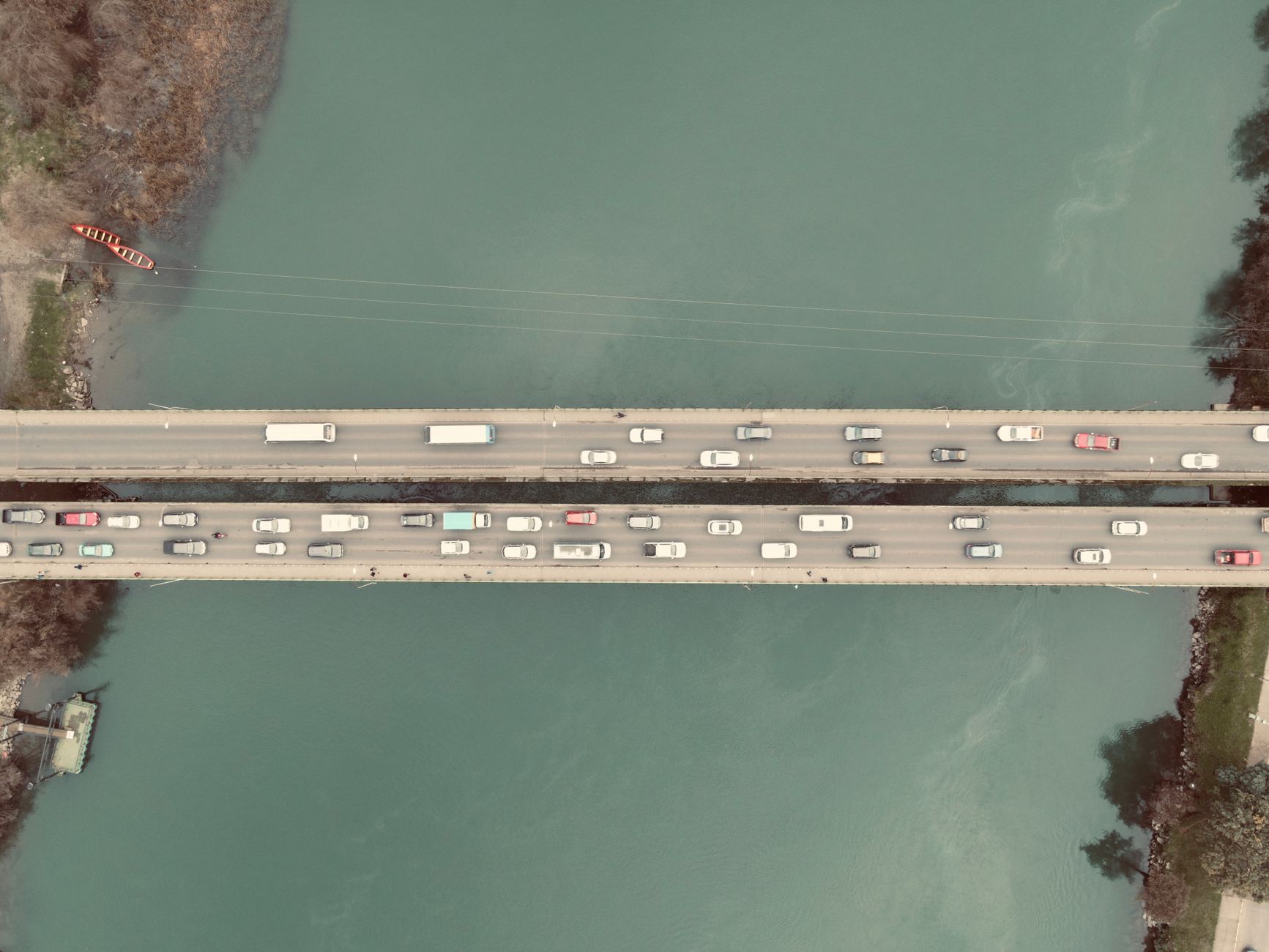
If you’ve been following infrastructure news this fall, you already know why the timing couldn’t be better: the U.S. still has over 42,000 bridges rated in “poor” condition, and state DOTs are finally writing drone programs into their 2027 budgets instead of treating them as pilot experiments. That shift means one thing for inspectors, engineering firms, and public works departments — the question is no longer whether to fly, but what to fly. This guide to the best drones for bridge inspections 2026 breaks down five platforms that actually survive the realities of under-deck work: GPS-denied environments, steel interference, tight clearances, and the unforgiving math of wind tunneling through truss members.
We’ve flown, researched, or interviewed operators running each of these airframes on real bridge jobs — from suspension cable walks in coastal humidity to pier cap surveys over fast-moving water. Here’s what holds up.
What Makes a Bridge Inspection Drone Different From Every Other UAV
Bridge work is arguably the most demanding inspection niche in the drone industry, and buying a general-purpose “inspection drone” off a spec sheet is how agencies end up with expensive shelf ornaments. Three factors separate genuine bridge-capable platforms from the rest:
GPS-denied navigation. The moment you tuck under a deck, satellite lock degrades or vanishes entirely. You need vision-based positioning, LiDAR SLAM, or both. Without it, you’re hand-flying inches from concrete — a bad trade for the safety gains drones are supposed to deliver.
Magnetic interference tolerance. Steel trusses and rebar-heavy concrete wreak havoc on compasses. Platforms that rely solely on magnetometers will drift or throw compass errors at the worst possible moment. Look for redundant IMUs and the ability to fly in ATTI-equivalent modes gracefully.
Sensor proximity, not just resolution. A 20MP camera two feet from a bearing pad beats a 48MP camera twenty feet away, every time. Obstacle avoidance that works at close range — and can be selectively disabled for tight approaches — matters more than headline megapixels.
Keep those three filters in mind as we walk through the picks.
DJI Matrice 4T: The All-Rounder for DOT-Scale Programs
DJI’s Matrice 4 series quietly became the default for transportation departments in 2026, and the 4T earns that spot for bridge work specifically. The triple-sensor payload — wide, medium tele (up to 112x hybrid zoom), and a 640×512 thermal camera — covers the full inspection workflow in one flight: wide context shots, telephoto reads on bolt patterns and crack propagation, and thermal passes for delamination detection on deck undersides.
Two features matter most for bridges. First, the onboard RTK module combined with vision positioning holds position reliably when GPS drops to single-digit satellite counts under decks. Second, the laser rangefinder gives you exact standoff distance to the structure — critical when you’re documenting crack widths and need consistent scale across hundreds of images.
Flight time hovers around 40 minutes in real conditions, and the IP55 rating shrugs off the mist and drizzle that haunt river crossings. The catch: DJI’s regulatory cloudiness means some federal-adjacent contracts still require NDAA-compliant alternatives. If that’s your world, keep reading.
Skydio X10: The Autonomy King for Truss and Cable Work
Skydio built its reputation on obstacle avoidance, and the X10 is the strongest argument that autonomy beats pilot skill for complex geometry. Flying inside a truss — where members cross every few feet and GPS is a rumor — the X10’s 360-degree vision system maps the structure in real time and holds station with a confidence that hand-flying simply can’t match for eight-hour inspection days.
The sensor package (a 64MP narrow camera plus thermal) is genuinely sharp enough for fracture-critical member documentation, and Skydio’s 3D Scan mode automates photogrammetry capture around complex nodes like gusset plates and pin connections. One operator we spoke with in the Pacific Northwest cut their per-bridge flight time by 35% after switching from manual orbits to X10 autonomous scans.
It’s also NDAA-compliant and domestically supported, which opens doors on federal and military-adjacent infrastructure contracts. Downsides: flight time is a modest 35 minutes, the thermal resolution (640×512) matches but doesn’t exceed the DJI, and the platform costs real money once you add batteries and the controller ecosystem. For truss-heavy inventories, though, it’s the safest pair of hands you can buy.
Flyability Elios 3: When You Have to Go Inside
Some bridge jobs aren’t about flying near the structure — they’re about flying inside it. Box girders, confined pier voids, and interior cable anchor chambers are exactly where the Elios 3 lives. The protective cage lets it bump, roll, and slide along steel and concrete without consequence, and the onboard LiDAR builds a live 3D map as it flies — a genuine game-changer for documenting interior spaces with zero GPS and zero light.
The 4K camera with a 10,000-lumen lighting system captures defect imagery in pitch-black box girder interiors, and the LiDAR point cloud exports directly into CAD and BIM workflows that engineering firms increasingly demand as deliverables.
Be honest about the trade-offs, though: the Elios 3 is a specialist. Flight time is roughly 12 minutes, it’s not weatherproof for exterior river crossings, and at its price point it’s a complement to an exterior platform, not a replacement. Firms doing mostly exterior deck and pier work should look elsewhere; firms with box girder inventories should consider it non-negotiable.
Autel EVO Max 4T: The NDAA-Friendly Value Play
Autel’s EVO Max 4T has matured into a credible DJI alternative for agencies that need domestic-friendly supply chains without Skydio’s price tag. The 8K-capable zoom camera, 640×512 thermal, and laser rangefinder mirror the Matrice 4T’s toolkit, and Autel’s mesh networking lets a second drone relay signal when the primary aircraft tucks behind a massive pier — a clever solution to the RF-shadow problem that plagues large bridge jobs.
Obstacle avoidance is solid if not quite Skydio-grade, and the 42-minute rated flight time translates to about 34 minutes with the payload active and a safety reserve. IP43 weather resistance is the weak point — fine for dry days, dicey in coastal spray.
For municipal agencies and mid-size engineering firms building their first bridge program on a sub-$10K budget, this is where the value lives.
Sony Airpeak S1: The Photogrammetry Purist’s Pick
When the deliverable is a millimeter-accurate 3D model for load rating or digital twin creation, the Airpeak S1 with a full-frame Sony A7-series camera produces imagery that compact-sensor drones can’t touch. The 61MP files from an A7R IV feed photogrammetry software with enough detail to resolve sub-millimeter cracking in the resulting models.
It’s the least “inspection-optimized” platform here — no thermal, modest flight time with a full-frame payload, and obstacle avoidance that demands a competent pilot. But paired with an RTK workflow, it’s how you produce the kind of bridge models that structural engineers actually sign off on.
How to Choose the Right Platform for Your Bridge Program
The best drones for bridge inspections 2026 aren’t one drone — they’re a match between your inventory and your deliverables. Run through this checklist before spending:
- Mostly truss and suspension bridges? Prioritize autonomy and GPS-denied flight — the Skydio X10 leads here.
- Box girders or interior voids? The Elios 3 is the only serious option.
- High-volume DOT contracts with thermal deliverables? Matrice 4T, assuming procurement rules allow DJI.
- Tight budget, NDAA-sensitive? Autel EVO Max 4T.
- Digital twin and load-rating deliverables? Airpeak S1 with full-frame photogrammetry.
Also budget beyond the airframe: plan on $3,000–$6,000 extra for spare batteries, a second controller for two-operator workflows, and software (DroneDeploy, Pix4D, or Skydio’s ecosystem) that turns imagery into reports engineers can use.
Conclusion
Bridge inspection is where drones stop being gadgets and start being genuine infrastructure tools — and 2026’s platforms finally reflect that maturity. Whether you need the Skydio X10’s autonomous confidence inside a truss, the Elios 3’s cage-protected access to box girder interiors, or the Matrice 4T’s do-everything sensor stack, the best drones for bridge inspections 2026 share one trait: they keep inspectors off ropes, out of snooper trucks, and away from live traffic while delivering better data than traditional methods ever could.
Start by auditing your bridge inventory — geometry, access constraints, and deliverable requirements — then match the platform to the hardest 20% of your structures, not the easiest 80%. The right drone pays for itself in avoided lane closures alone, often within the first season. Fly safe, document everything, and your 2027 inspection reports will be the best your agency has ever produced.