Agriculture Drone Spraying Systems Comparison: How 2026's Autonomous Fleets Are Changing Farm Economics
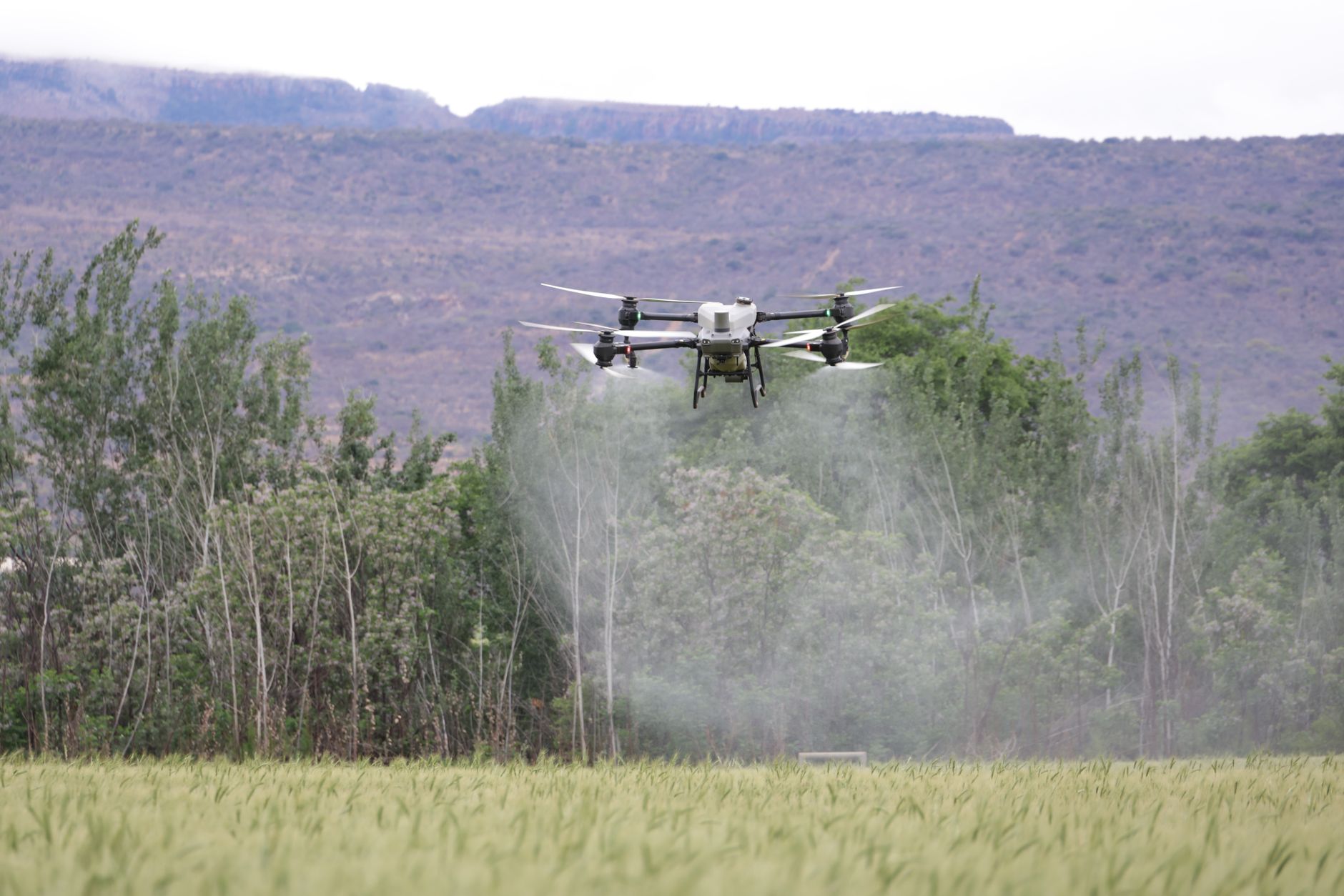
With the 2026 harvest season approaching and commodity prices squeezing margins tighter than ever, American farmers are making a pivotal shift: they’re treating drone spraying not as a novelty, but as core infrastructure. The numbers tell the story. According to the USDA’s August 2026 report, 34% of mid-to-large corn and soybean operations now operate at least one spraying UAV—up from just 12% in 2023. And here’s what’s forcing the conversation: the new EPA drone-specific pesticide labels that took effect this spring have expanded the legal chemical toolkit for aerial application, making agriculture drone spraying systems comparison the most searched equipment query on farm co-op message boards right now.
This guide cuts through the marketing noise. We’re comparing the systems farmers are actually buying in 2026, with real performance data, hidden cost traps, and the specific use cases where each platform dominates.
Why 2026 Is the Tipping Point for Spraying UAVs
Three converging forces are accelerating adoption beyond the early-adopter phase:
Regulatory clarity finally arrived. The EPA’s Part 137 exemption overhaul and state-level applicator certification reciprocity agreements mean you can now legally spray 47 additional active ingredients via drone, including dicamba formulations and certain fungicides that were previously restricted to manned aircraft.
Labor economics have flipped. Average farmhand wages hit $22.40/hour nationally this summer, with many Midwest operators reporting $28-32/hour for experienced tractor sprayer operators. A single DJI Agras T60, operated by one person, can cover what three ground rigs managed five years ago.
Battery and tank technology matured. We’re seeing 40-liter (10.5-gallon) payload capacities with 15-minute turnaround cycles—practical numbers that weren’t achievable with 2022-era lithium chemistry.
The question is no longer whether to adopt drone spraying, but which system matches your crop mix, acreage, and operational reality.
Agriculture Drone Spraying Systems Comparison: The 2026 Contenders
DJI Agras T60: The Efficiency Benchmark
DJI’s flagship dominates the North American market for straightforward reasons: ecosystem integration and brutal efficiency.
| Specification | DJI Agras T60 |
|---|---|
| Max payload | 50 liters (13.2 gallons) |
| Spray width | 8-12 meters (adjustable via radar) |
| Coverage rate | 40-50 acres/hour at 3 GPM |
| Flight time (full tank) | 12-15 minutes |
| Base station price | $28,500 USD |
Where it wins: Continuous monoculture operations—corn, soy, wheat corridors where you’re doing the same application across hundreds of contiguous acres. The T60’s RTK mapping integrates with DJI’s Terra software for prescription spraying based on NDVI maps, and the dealer network means parts within 48 hours in most agricultural regions.
The catch: DJI’s closed ecosystem locks you into their batteries ($3,200 each, plan on 4-6 minimum), and the T60’s 45kg MTOW requires Part 107 with a specific agricultural endorsement in most states. It’s also overkill if you’re under 200 acres or running diverse specialty crops.
XAG P100 Pro: The Precision Specialist
China’s XAG has aggressively expanded U.S. dealer support in 2026, and the P100 Pro represents a fundamentally different philosophy than DJI’s brute-force approach.
| Specification | XAG P100 Pro |
|---|---|
| Max payload | 40 liters |
| Spray width | 5-8 meters |
| Coverage rate | 25-35 acres/hour |
| Flight time (full tank) | 14-18 minutes |
| Base station price | $22,900 USD |
The P100 Pro’s centrifugal atomizer—XAG’s proprietary tech—breaks droplets into 60-400 micron range with real-time adjustment based on wind speed and crop canopy density. This matters enormously for vineyard operators, orchardists, and anyone applying growth regulators where drift management is liability-critical.
Where it wins: Specialty crops requiring precision over throughput. The P100 Pro’s obstacle avoidance handles vertical trellis systems better than anything in its class, and the lower per-unit cost makes it viable for cooperative ownership models that we’re seeing in Central Valley grape operations.
The catch: Dealer density is thinner—breakdowns in remote locations can mean 5-7 day parts delays. The software ecosystem is less mature for prescription mapping; you’ll likely need to export shapefiles from your existing agronomy platform.
Hylio AG-210: The American Alternative
Hylio’s Texas-built system has carved a niche for operators prioritizing domestic supply chains and customization.
| Specification | Hylio AG-210 |
|---|---|
| Max payload | 30 liters |
| Spray width | 6-10 meters |
| Coverage rate | 20-30 acres/hour |
| Flight time (full tank) | 16-20 minutes |
| Base station price | $19,500 USD |
The AG-210 runs open-source PX4 firmware with full access to flight parameter tuning. For operators with in-house engineering capability—particularly university extension programs and large co-ops running custom application research—this transparency is invaluable.
Where it wins: Experimental programs, custom tank mixes requiring precise flow calibration, and operations where “buy American” is contractually or politically mandated. Hylio’s direct-to-manufacturer support model means you’re talking to engineers, not ticket queues.
The catch: You’re trading convenience for control. The AG-210 demands more operator technical skill, and the smaller payload means more battery swaps per acre. It’s a tool for tinkerers, not turnkey operators.
Hidden Cost Calculations That Make or Break ROI
The sticker price is the least important number. Here’s what our agriculture drone spraying systems comparison reveals when you model three-year total cost of ownership for a 500-acre corn/soy operation:
| Cost Factor | DJI T60 | XAG P100 Pro | Hylio AG-210 |
|---|---|---|---|
| Base unit + 4 batteries + charger | $41,500 | $34,200 | $28,900 |
| Annual insurance (liability + hull) | $4,800 | $5,200 | $6,100 |
| Annual maintenance/parts | $3,200 | $4,100 | $2,800 |
| Operator certification/training | $1,500 | $2,200 | $3,500 |
| 3-year TCO | $72,100 | $64,500 | $58,800 |
The Hylio looks cheapest until you factor in productivity loss. At 25 acres/hour versus the T60’s 45, you’re covering that 500-acre operation in 20 hours versus 11. During narrow application windows—think fungicide timing at VT/R1 corn stage—that delta can mean the difference between protecting yield and watching gray leaf spot take 12 bushels off your APH.
Battery degradation is the sleeper cost. After 300 cycles, expect 20-25% capacity loss. DJI’s battery management system and dealer trade-in program partially mitigate this; XAG and Hylio require more proactive fleet planning.
Matching System to Application: Decision Framework
Skip the spec sheet shootout. Answer these operational questions:
What’s your dominant crop and growth stage?
- Row crops at full canopy → T60’s throughput advantage
- Vineyards, orchards, nurseries → P100 Pro’s atomization control
- Research plots, mixed vegetables → AG-210’s parameter flexibility
What’s your labor structure?
- Owner-operator with seasonal help → Any system works with training investment
- Employee-operated fleet → T60’s training ecosystem reduces turnover risk
- University/extension program → AG-210’s data transparency
What’s your chemical portfolio?
- Standard herbicide/fungicide rotation → All systems handle this
- Growth regulators requiring ultra-coarse droplets → P100 Pro’s atomizer range
- Experimental formulations, custom adjuvants → AG-210’s flow calibration access
What’s your risk tolerance for downtime?
- Dealer within 100 miles, harvest season critical → T60
- Remote location, backup equipment available → P100 Pro or AG-210 with spare parts inventory
The Verdict: No Universal Winner, But Clear Best Fits
Our agriculture drone spraying systems comparison lands on an unsatisfying but honest conclusion: the “best” system is the one that disappears into your existing operation with minimal friction.
For the 400-acre-plus corn belt operator running tight application windows with hired labor, the DJI T60’s throughput and support ecosystem justify the premium. For the Central Valley vineyard manager applying sulfur at 3 AM to beat thermal inversions, the XAG P100 Pro’s drift control is worth the coverage tradeoff. For the research-minded operator or the co-op exploring cooperative ownership, the Hylio AG-210’s transparency and price point create viable entry.
The 2026 season is proving that drone spraying has graduated from pilot project to production tool. The operators winning with these systems aren’t chasing specifications—they’re matching platform capabilities to operational reality, then executing with the discipline that precision agriculture has always demanded. Choose based on your acres, your crops, your crew, and your chemical program. The hardware is finally good enough that the decision matters less than the implementation.